


PitAPatAI: Stories With Heart
4.6146.00 Reviews
App Specs
- Version
- 1.2.5
- Updated On
- License
- Free
- Downloads
- 50,000+
- Developer
- The App Maven LLC
- Categories
- Entertainment
- Platform
- Android
Screenshots



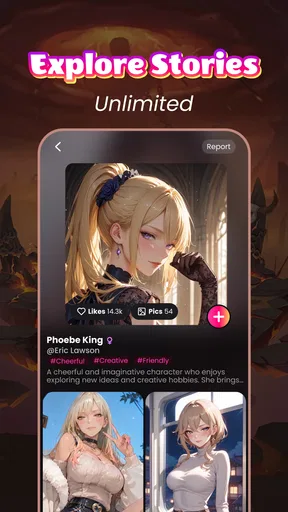

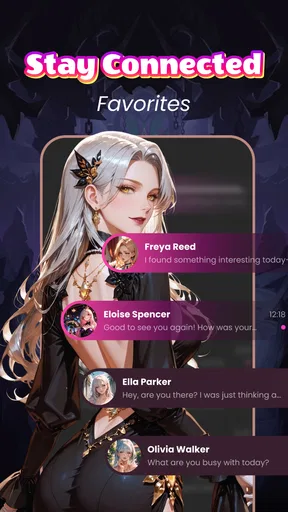
 Analysis by AppCompare
I approached PitAPatAI: Stories With Heart as an entertainment app for people who want more than passive scrolling. Its central idea is simple: chat with a friend and explore interactive stories. In practice, that puts it somewhere between a conversational companion and a choose-your-path reading experience. I found the appeal strongest when I wanted a short, personal-feeling activity rather than a long game or a conventional social network.
The app is free to install, which makes trying it fairly easy, but it is aimed at a mature audience and carries a Mature 17+ rating. That matters because this is not the kind of app I would casually hand to a younger teenager. The developer is The App Maven LLC, and the current version is 1.2.5. It supports devices running Android 8.1 or later, so compatibility is reasonably broad for older Android phones.
How I would decide whether it belongs on your phone
My first decision criterion would be the kind of entertainment you actually want. If you prefer watching finished shows, reading a fixed novel, or playing a game with clear objectives and measurable progress, this may feel too open-ended. If you enjoy conversation, emotional scenarios, and making choices that shape the tone of a story, the concept is much more inviting.
I would also ask how much patience you have for an experience that depends on interaction. A traditional streaming app gives you immediate content with very little effort. A standard story app usually presents a carefully authored sequence. PitAPatAI sits between those approaches, so the enjoyment comes from participating rather than simply consuming. That can make a session feel more personal, but it also means the quality of the moment depends on how willing I am to engage.
The app’s store summary focuses on chatting with a friend and exploring interactive stories. I read that as an important clue about its best use: it is designed around shared discovery, not just solitary reading. I would be more likely to open it with someone who enjoys discussing fictional situations, comparing choices, or seeing how a conversation develops than with someone who wants a completely hands-off pastime.
There is also a practical decision to make around audience. The Mature 17+ label should be treated as a real boundary, not a decorative note. Parents looking for a family-friendly storytelling app should choose something with a clearly younger audience instead. Adults who are comfortable with mature entertainment can consider it, but I would still pay attention to the tone of each story before involving another person.
One useful way to test the fit is to start with a specific purpose instead of opening it without a plan. For example, I might use it during a relaxed evening to explore one story with a friend, or as a conversation starter when we want something more engaging than sending random messages. That approach makes the app’s interactive nature work for me rather than leaving me wondering what I am supposed to do next.
Worth Reading Before You Choose

EA SPORTS FC Mobile 26 Is a Bigger Football Game, but It Takes Time

Flipboard Shows What News Apps Must Do Beyond the Feed

Switching to Android Auto Means Rethinking Your Driving Routine

Google Calendar Makes a Crowded Week Easier to Manage

Ludo King Makes the Most of the Minutes Between Plans

Baby Panda World Brings Quick Play to Modern Phones, but Its Game Library Feels Busy
What the conversational format changes
The chat-based format changes the rhythm of entertainment. In a normal book, I follow the author’s pacing. In a film, I accept the director’s sequence. Here, the feeling is closer to taking part in a scene. I have to choose how to respond, decide whether to continue, and pay attention to the direction the exchange takes.
That makes the app especially suitable for people who enjoy emotional nuance. A short exchange can be more memorable when I am involved in shaping it. The trade-off is that I cannot judge it only by the quality of a single opening screen. The real value appears over a session, when the interaction has enough room to develop.
I would not treat it as a replacement for messaging apps, either. A messaging service is built for keeping up with real friends, sharing practical information, and maintaining ongoing relationships. This app is better understood as entertainment that borrows the familiar feeling of conversation. That distinction helps set expectations and avoids disappointment if you are searching for a full social platform.
Where it feels more compelling than ordinary entertainment apps
The strongest part of the experience is its combination of conversation and narrative. Many entertainment apps make me choose between reading and interacting. PitAPatAI brings those activities together, which gives a story a more immediate quality. I am not only asking what happens next; I am also considering how I want to participate.
Its biggest advantage is the feeling of shared discovery. When two people approach an interactive story together, the discussion around a choice can become part of the entertainment. One person may want to take a cautious direction while the other prefers a dramatic one. Even when the story itself is brief, that disagreement can create a reason to keep going.
A realistic everyday scenario would be using it after dinner when a friend and I have a few minutes to fill. Instead of opening separate feeds and silently scrolling, we could explore a story together, pause at a decision, and talk about which response feels right. That is a more focused activity than casual browsing, but it does not demand the time commitment of a full console game or a long movie.
I also see value in using it as a low-pressure icebreaker. If a conversation has gone quiet, an interactive scenario gives both people something concrete to react to. The story supplies a topic, while the choices reveal preferences and personality. That use is more specific than simply calling the app “fun”: it can help turn an awkward pause into a shared activity.
Another less obvious strength is that the app may suit short sessions better than large entertainment platforms. A streaming service often encourages me to spend time deciding what to watch before I watch anything. A large game can require installation space, tutorials, and a substantial block of free time. A conversational story can be easier to fit into a spare moment, particularly when I want engagement without a major commitment.
Small habits that make the experience work better
I would begin by agreeing with the other person on the kind of mood we want. A playful session, a thoughtful session, and a dramatic session can all feel different even when the basic activity is similar. Setting that expectation first reduces the chance that one person treats the story as a joke while the other is taking it seriously.
I would also avoid rushing through every choice. The temptation with interactive entertainment is to tap quickly just to see the next screen. That misses the main reason to use this app. Taking a moment to explain why I prefer one direction creates conversation and makes the story feel less like a sequence of buttons.
A third useful habit is to treat the first session as a trial of the format, not a final verdict on every possible story. If I am not immediately absorbed, I would ask whether the issue is the scenario, the mood, or the conversational structure itself. Someone who dislikes interactive storytelling in general is unlikely to become a regular user, while someone who simply chose the wrong kind of story may still find the right fit.
For group use, I would keep the number of participants manageable. The app’s premise is naturally strongest when everyone can follow the exchange and contribute. A very large group could turn a personal-feeling interaction into a noisy discussion, so I would choose it for one-to-one use or a small circle rather than treating it like a party game.
Where a different category may suit you better
Alternatives are stronger when you already know exactly what kind of entertainment you want. For finished narratives, a video streaming service is more predictable. For traditional interactive fiction, a dedicated story game may offer a clearer sense of progression, structured choices, or a larger fictional world. For real conversation, a messaging app remains the more practical tool.
I would also choose a conventional game if I wanted challenge, rules, and a visible objective. PitAPatAI is not the obvious choice for someone looking for competition, reflex-based action, puzzles, or a detailed achievement system. Its appeal is conversational and narrative rather than performance-driven.
Readers who prefer complete control over their media may find the format less satisfying. A novel does not ask me to improvise a response, and a film does not depend on my participation. That certainty can be relaxing. With this app, I have to accept that interaction is part of the product, including the possibility that a session will not develop exactly as I hoped.
The mature audience is another reason some people should skip it. Families searching for a safe shared activity for children should look elsewhere. Likewise, anyone uncomfortable with mature themes or who wants a clearly all-ages environment would be better served by an app designed around that expectation from the beginning.
There is a difference between wanting an AI-style conversation and wanting a story. If your priority is open-ended advice, productivity, research, or a general-purpose assistant, an entertainment app built around interactive stories is the wrong category. I would not download it expecting it to organize my day, answer technical questions, or replace a trusted personal conversation.
Understanding the free download and possible spending
The free entry point is helpful because the format is personal enough that screenshots and a short description cannot fully demonstrate whether it suits you. I can try the experience before committing money, which is the right arrangement for an app whose value depends so much on taste and participation.
However, the in-app purchase range is unusually broad, running from $2.99 to $799.99 per item. That makes it important to slow down around any purchase screen and understand exactly what is being offered before confirming anything. I would especially avoid treating a low starting price as an indication that every optional item will cost roughly the same.
My practical advice is to use the free experience as a genuine evaluation period. Decide whether you enjoy the conversation, whether the stories hold your attention, and whether you would return with the same friend before spending. The key question is not simply whether I liked one session; it is whether the app has become a repeatable part of how I relax or connect.
This is also where the cost of switching matters. Moving from a film or book app to PitAPatAI means giving up some predictability in exchange for participation. Moving from a messaging app means accepting that the conversation is framed by fictional entertainment rather than by everyday life. Moving from a story game means valuing social interaction over conventional game systems. The switch is worthwhile only when that trade feels attractive.
I would not recommend paying merely to make the app feel more complete if the basic format does not already appeal to me. Optional spending cannot solve a mismatch between the product and my preferred kind of entertainment. On the other hand, if the free experience consistently gives me enjoyable sessions with a friend, a purchase may make more sense as support for a hobby I am already using rather than as a gamble on potential.
Who should install it, and who should pass
I would recommend giving it a try if you enjoy interactive fiction, conversational entertainment, and sharing choices with another person. It is particularly promising for adults who want a lightweight activity that creates discussion without requiring a full game night. People who like exploring emotional situations or imagining different outcomes are likely to understand its appeal quickly.
I would be more cautious for solo users. The app can still be interesting if you enjoy engaging with stories on your own, but its strongest identity is tied to chatting with a friend. If you are downloading it because you want an extensive single-player game, check your expectations before investing much time.
I would also pass if you want a predictable catalog of finished content, a conventional social network, or a family-friendly app. Those are not minor differences; they describe different needs. Choosing a more specialized alternative in those cases will probably lead to a better experience than trying to force this app into the wrong role.
The app has earned a 4.6 average from around 1.9 thousand ratings, with more than a hundred written reviews, and it has passed 50 thousand installs. Those figures suggest that the concept has found an audience, but I would still weigh them against the mature rating, the interactive format, and the wide purchase range. Popularity can indicate interest without guaranteeing that the experience matches my habits.
My recommendation after weighing the trade-offs
My recommendation is positive, with clear conditions. PitAPatAI: Stories With Heart is worth trying when I want entertainment that asks me to participate and gives me something to discuss with a friend. It stands out from passive media because the conversation is not just a way to access the story; it is part of what makes the session enjoyable.
I would install it through the free option, begin with a short shared session, and pay attention to whether the interaction feels natural rather than forced. I would keep the Mature 17+ rating in mind, review purchase prompts carefully, and avoid spending until the app proves that it fits into my routine.
For me, the deciding question is simple: do I want to watch a story, read a story, or take part in one? If the answer is the third option, this entertainment app offers a distinctive reason to stay. If the answer is the first or second, a streaming service or dedicated reading app will likely be more comfortable. That makes PitAPatAI a focused recommendation rather than an all-purpose one, and that focus is exactly what gives it personality.
Pros
- AI-generated stories offer fresh plots and unexpected creative twists.
- Heartfelt themes make the reading experience emotionally engaging.
- Useful for relaxing
- reflective reading sessions on the go.
- Simple concept makes it accessible to casual readers of different ages.
- Story variety can help reduce repetition between reading sessions.
Cons
- Story quality may vary noticeably depending on the generated prompt.
- Some narratives can feel formulaic or lack strong character development.
- AI-written content may occasionally include awkward wording or inconsistencies.
- Requires an internet connection for some story-generation features.
- Readers seeking long
- complex novels may find the stories too brief.
FAQs for PitAPatAI: Stories With Heart
What is PitAPatAI: Stories With Heart?
PitAPatAI: Stories With Heart is an AI-powered storytelling app designed to create personalized stories with emotional, character-driven narratives. It can be used for casual reading, creative inspiration, or making stories around selected themes and ideas. Before downloading, users should understand that the exact experience may depend on the available story tools, account requirements, language support, and any limits placed on free or premium features.
How does PitAPatAI create personalized stories?
The app generally relies on artificial intelligence to transform user prompts, preferences, or selected story elements into original narrative content. You may be able to influence the characters, mood, setting, or plot direction, although the level of customization can vary. AI-generated stories may occasionally contain repetition, unexpected details, or inconsistencies, so the results are best viewed as creative entertainment rather than professionally edited literature.
Is PitAPatAI: Stories With Heart free to download and use?
The application may be available to download without an upfront charge, but free access does not always mean that every feature is included. Some storytelling options, extended usage, additional content, or advanced AI tools may require in-app purchases or a subscription. Check the current App Store or Google Play listing carefully for pricing, trial terms, renewal conditions, and whether usage limits apply before confirming any payment.
Is PitAPatAI suitable for children and family use?
Suitability depends on the stories generated and the app’s current age rating, content controls, and privacy settings. Because AI can produce unexpected themes or wording, parents should review the platform before allowing younger users to use it independently. It is also important to check whether the app collects prompts, account information, or other personal data, and to use parental controls where they are available.
Does PitAPatAI require an internet connection or an account?
AI storytelling services commonly need an active internet connection because prompts are processed through online systems rather than entirely on the device. The app may also request an account for saving stories, synchronizing content, or accessing premium features. Requirements can change between versions, so users should review the latest store description and permissions. A stable connection may also be important for avoiding failed or interrupted story generation.


